Ensuring every pharmaceutical product is what it claims to be —
through
precise instrumentation, rigorous testing, and quality science.
Maria College of Pharmacy
Department
Department of Pharmaceutical Analysis
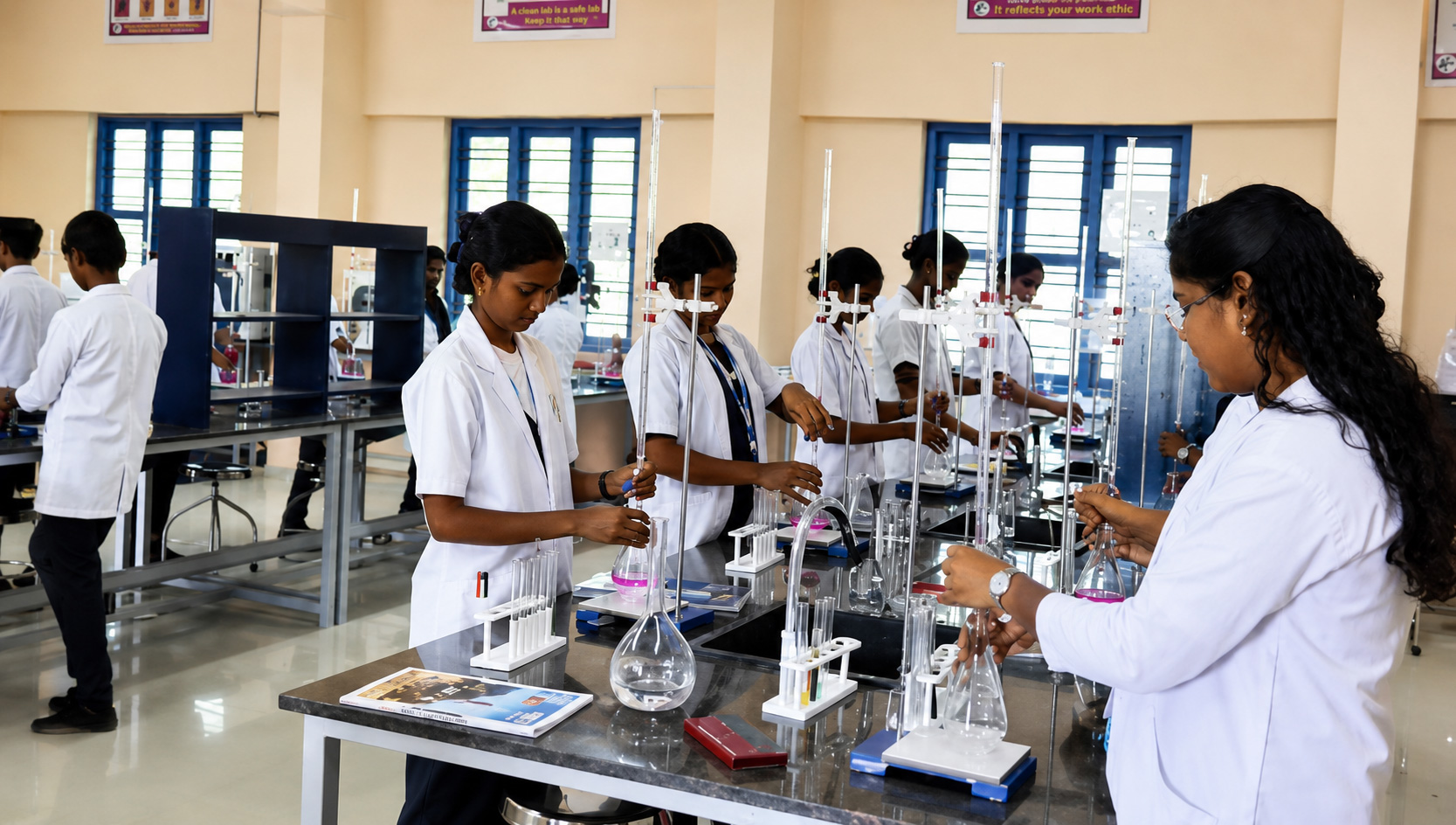
One of the main goals of Pharmaceutical Analysis is to ensure the quality, safety
and efficacy of pharmaceutical products via theoretical and practical teaching. The department is
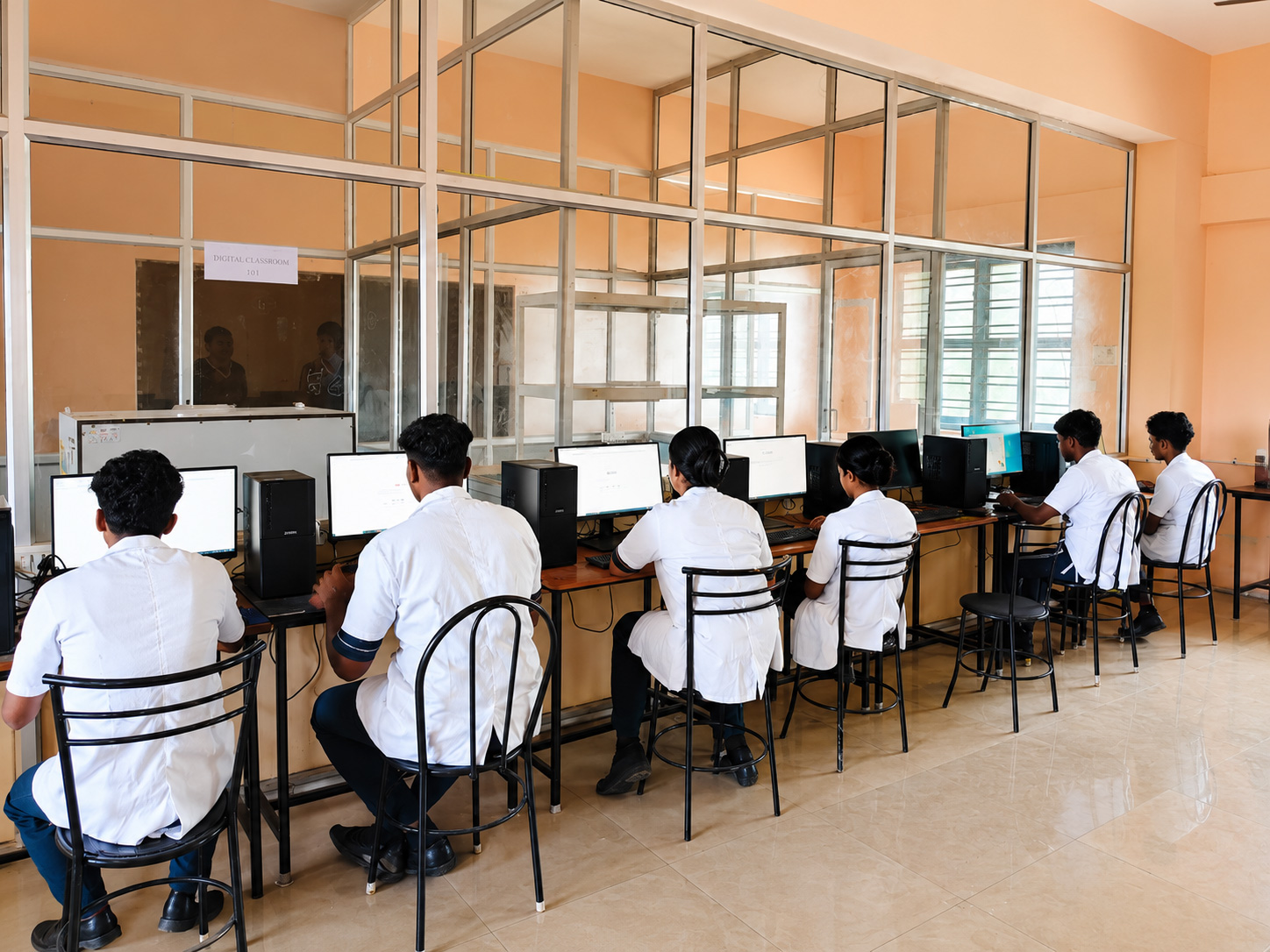
equipped with cutting-edge equipment and qualified faculty, making it appropriate for teaching and
research in the modern day. The department features sophisticated instruments in its well-maintained
laboratories and it also has a central instrumentation room with cutting-edge analytical equipment
available.
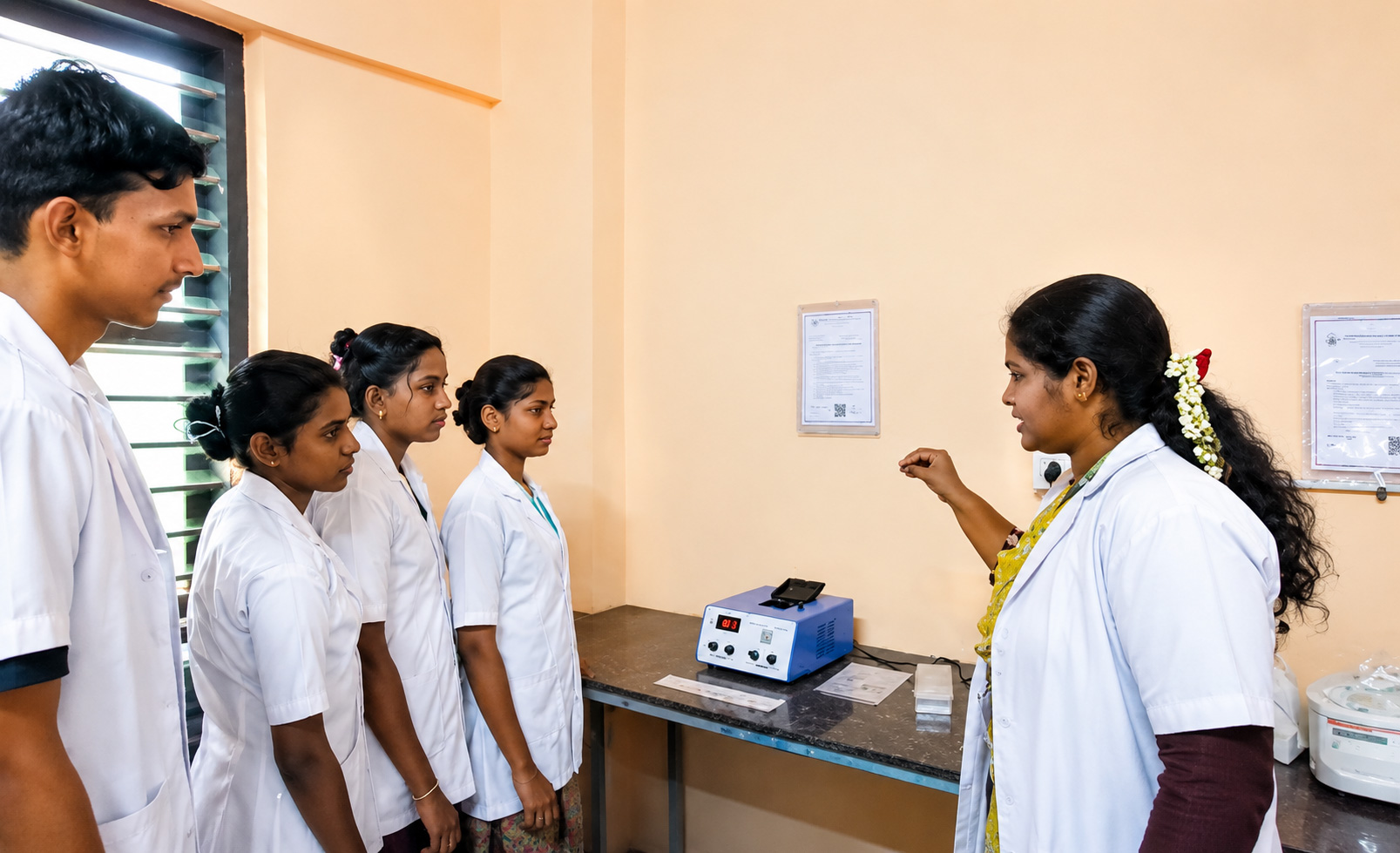
For routine instruction and research, tools such as Gas Chromatography, Automatic
Absorption Spectrometer, Fluorescence Spectroscopy, Ultrafast Liquid Chromatography, Fourier
Transform IR Spectroscopy, UV Spectrophotometers, Sonicators, Polarimeters, Flame Photometers,
Rotary Flash Evaporators, Refractive Index instruments and Statistical Software are used. It
involves basic research in identity, purity, content and stability of starting materials, excipients
and active pharmaceutical ingredients.
Drug design offering a strong CADD environment with advanced software for
structure-based design, molecular dynamics, pharmacophore modelling, QSAR and ADME prediction to
support UG and research students in discovering new drugs. This facility provides tools to
simulate drug-target interactions and design therapeutic candidates, covering the spectrum from
target identification to lead optimization.
CADD Capabilities
Structure Based DesignMolecular DynamicsPharmacophore ModellingQSAR PredictionADME PredictionTarget IdentificationLead Optimization
Biochemistry
The Department of Biochemistry is involved in teaching undergraduate students,
conducting research and maintaining high standards in diagnostic services. The department offers
a curriculum balanced between theoretical learning and training in experimental methods. It has
the facility to conduct specialized tests for blood, urine, hormones, tumour markers, vitamins,
clinical toxicology and basic metabolic screening in labs that have the latest equipment.
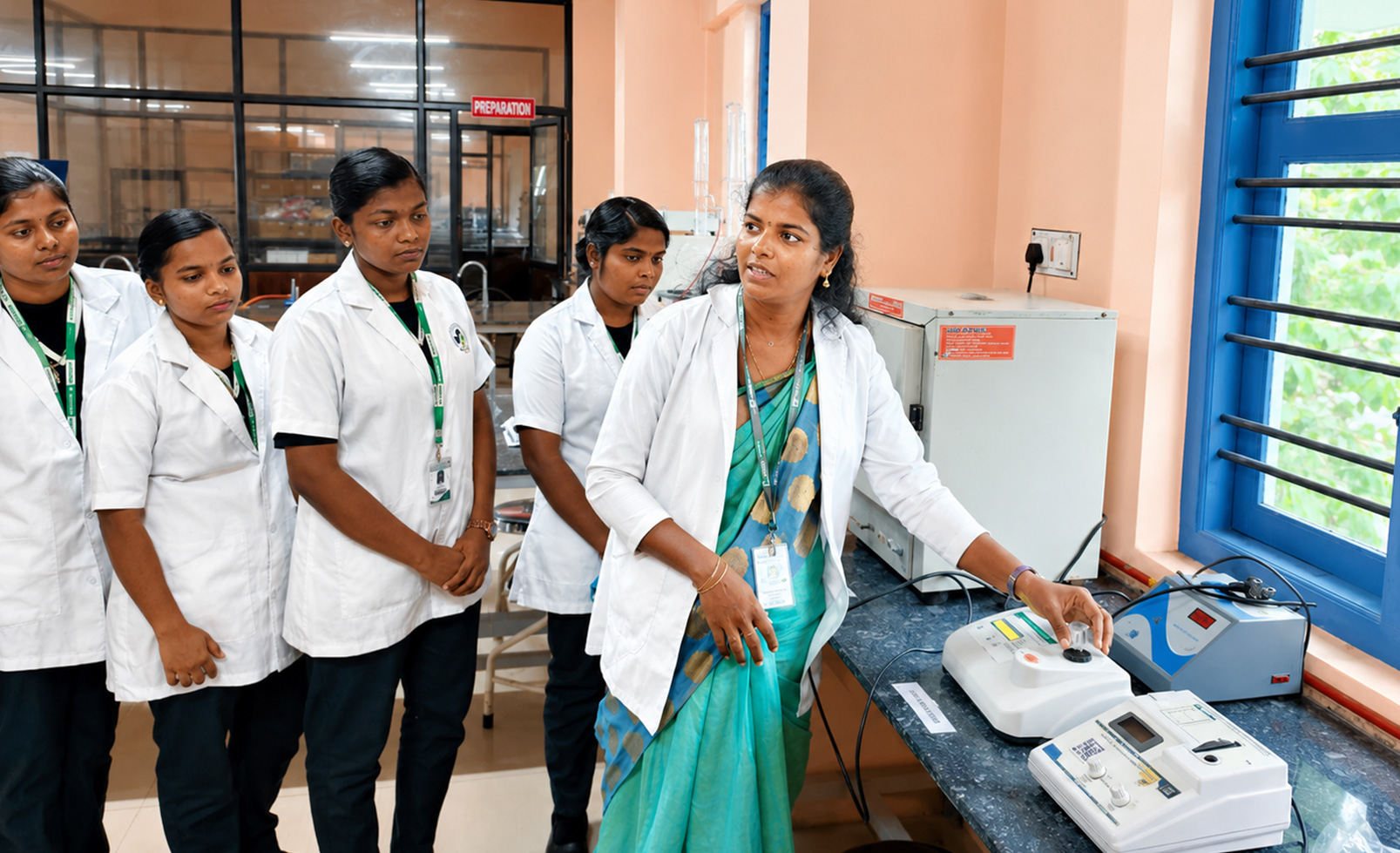
The Central Instrumental Methods of Analysis lab provides advanced facilities
for pharmacy students equipped with instruments like HPLC, FT-IR, Gas Chromatography, UV-Vis
Spectrophotometers, Atomic Absorption Spectrometer and Fluorescence Spectrometer, enabling
practical training in drug analysis, impurity profiling and bio-analytical method development.
The lab supports research in areas like drug stability and pharmacokinetic studies.
Supports research in drug stability, pharmacokinetic studies, impurity profiling and
bio-analytical method development.
About the Department
Quality, verified at every step
The Department of Pharmaceutical Analysis at Maria College of Pharmacy
is dedicated
to ensuring the quality, safety, efficacy, and stability of pharmaceutical products through
advanced
analytical techniques and scientific evaluation methods. The department provides students with
comprehensive
knowledge in analytical chemistry, instrumental analysis, quality control, drug testing, and
validation
procedures essential in modern pharmaceutical industries and healthcare sectors.
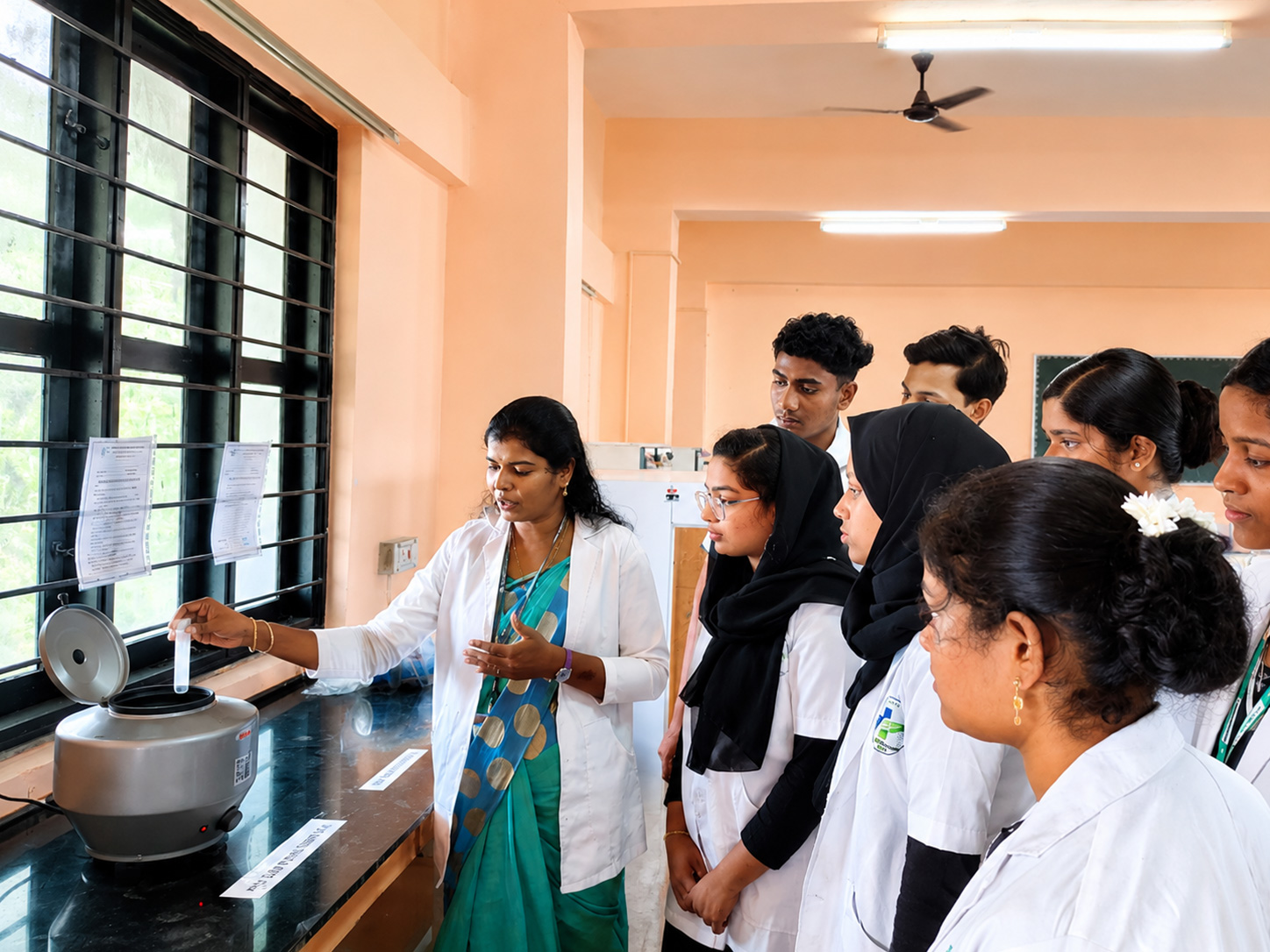
The department emphasizes both theoretical learning and practical
laboratory training to help
students
develop strong analytical skills and scientific expertise. Through modern instrumentation,
research-oriented
education, and professional training, students gain the ability to analyze pharmaceutical
substances and
ensure compliance with quality standards and regulatory requirements.
Equipped with advanced analytical laboratories and sophisticated
instruments, the department
trains students
in pharmaceutical analysis techniques, instrumental methods, drug stability studies, quality
assurance,
validation, bioanalytical methods, regulatory compliance, and research methodologies — promoting
scientific
accuracy and precision essential to healthcare safety.
Focus Areas
Precision science across every method
Instrumental Methods of Analysis
Specialized training in modern analytical instruments used
across
pharmaceutical industries for drug evaluation and quality testing.
UV-Visible Spectroscopy
FT-IR Spectroscopy
Gas Chromatography (GC)
High Performance Liquid Chromatography (HPLC)
Fluorescence Spectroscopy
Flame Photometry
Polarimetry
Atomic Absorption Spectroscopy
Refractive Index Analysis
Drug Analysis & Quality Control
Ensuring pharmaceutical products meet established quality
standards, purity
levels, and safety requirements before reaching patients.
Assay Procedures
Purity Testing
Stability Analysis
Impurity Profiling
Dissolution Testing
Pharmaceutical Validation
Quality Assurance Protocols
Standard Operating Procedures
Computer Aided Drug Design (CADD)
Computational approaches used in modern drug discovery,
integrating computer
science with pharmaceutical research and innovation.
Molecular Docking
Pharmacophore Modelling
QSAR Studies
ADME Prediction
Molecular Dynamics
Lead Optimization
Virtual Screening
Drug Target Interaction Studies
Biochemistry & Analytical Research
Biochemical testing procedures, diagnostic methods, and
clinical analysis
techniques essential in pharmaceutical and healthcare applications.
Clinical Biochemistry
Diagnostic Testing
Blood & Urine Analysis
Hormone Analysis
Toxicological Screening
Metabolic Studies
Pharmaceutical Research
Research Activities
A culture of scientific accuracy
The department actively encourages research and scientific innovation in pharmaceutical
sciences and
analytical chemistry. Faculty members and students engage in research-oriented learning
through seminars,
workshops, conferences, and project activities.
Pharmaceutical Quality AnalysisStability StudiesDrug Development ResearchBioanalytical Method DevelopmentHerbal Drug AnalysisInstrumental Analytical ResearchPharmacokinetic StudiesPharmaceutical Validation Techniques
What Guides Us
Core Values
Precision & Accuracy
Scientific Integrity
Quality Commitment
Innovation & Research
Ethical Professional Practice
Academic Excellence
Student Empowerment
Teamwork & Collaboration
Responsibility & Discipline
Healthcare Safety
Looking Ahead
Goals of the Department
Provide strong academic and practical knowledge in pharmaceutical analysis.
Develop analytical and problem-solving skills among students.
Train students in modern instrumental techniques and quality systems.
Promote research and innovation in pharmaceutical sciences.
Ensure understanding of regulatory and validation procedures.
Strengthen industrial and healthcare-oriented analytical practices.
Prepare students for careers in pharmaceutical industries, research laboratories, and
healthcare sectors.
Nurture ethical and professionally competent pharmaceutical analysts.